Tag: U-S-Games

  • Sun and Moon Tarot Review

    Sun and Moon Tarot Review

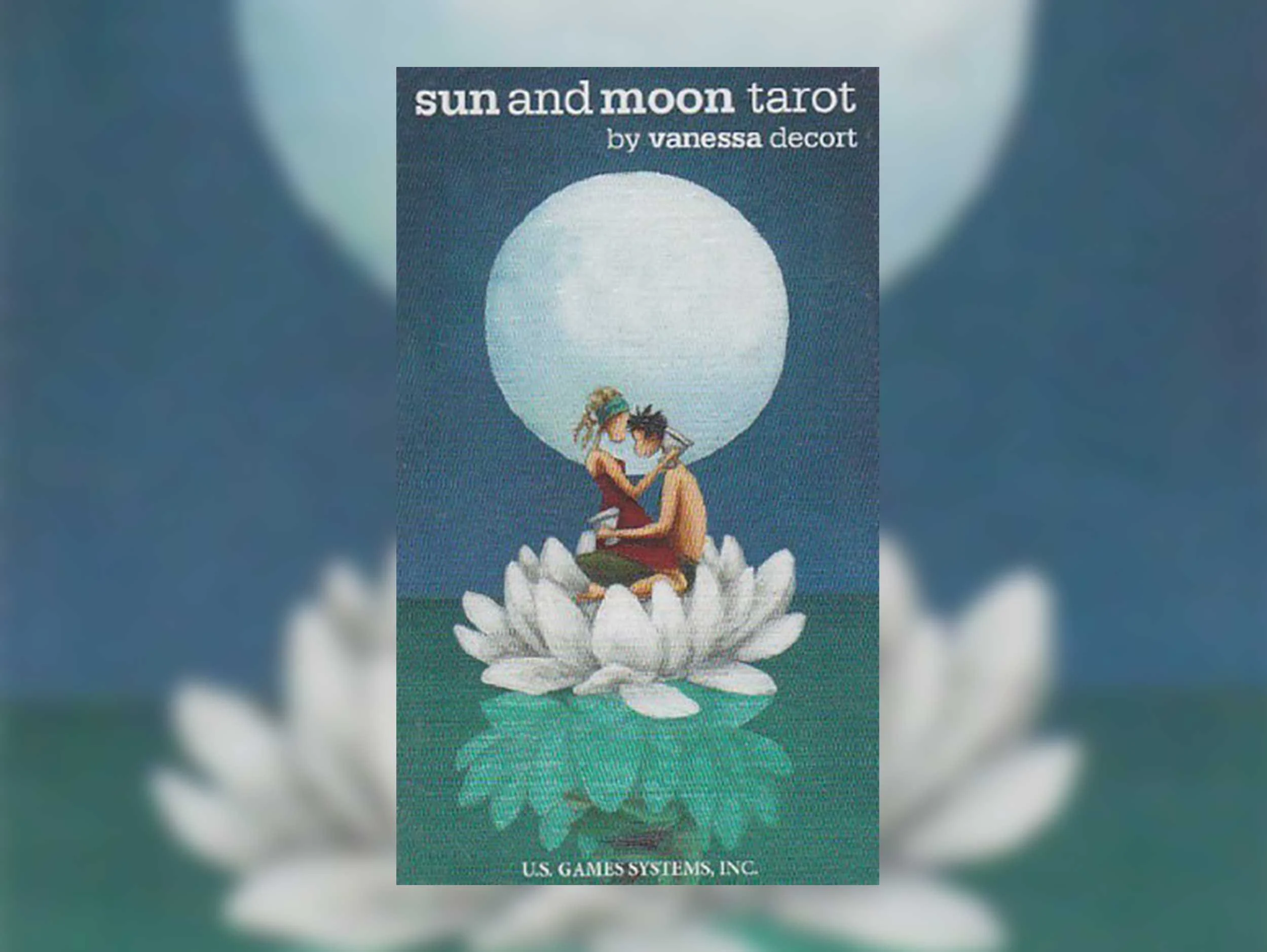
    Sun and Moon Tarot
    By Vanessa Decort
    Published by US Games
    Review by Christiana Gaudet © 2010

    The title, Sun and Moon Tarot, conjures celestial images, thoughts of outer world versus inner world, masculine and feminine, and, of course, two Major Arcana cards. In looking through the deck, it is unclear to me why it is so titled. There don’t seem to be any obvious references to celestial bodies, light and dark, God and Goddess, or inner and outer worlds.  The deck does have a sense of universality; we are all different, and yet all one. Perhaps that is what Vanessa Decort was trying to convey with her heavenly title; that we are all the same under the sun and the moon.

    Unlike many tarot artists, Vanessa Decort is both a tarotist and an artist. Her first introduction to tarot was the Crowley Thoth Harris deck.  According to the deck’s accompanying materials, Decort designed the deck “to deepen her understanding of tarot’s messages”. It was her goal to incorporate in Sun and Moon Tarot “universal archetypes and symbols from many cultures”.  

    The colors of Sun and Moon Tarot are lovely and the images are evocative. This deck is like no other I have seen, and yet it is grounded enough to make it serviceable and understandable. While there are many tarot decks available, there are very few that are both unique and truly usable. Sun and Moon Tarot is.

    The cards are standard sized, and have a plain white border. The card titles are on the bottom, in the border. There are no capital letters; all words on the cards and the box are lower case. .Numbers are written out in the card titles; there are no roman numerals. New students will enjoy the ease with which they can identify each card, even the pips, by name.

    Sun and Moon Tarot honors both Waite and Crowley. The Crowley keyword for each pip card is boldly printed in the top of the white border.   The images themselves are often reminiscent of Waite images. Justice is card eight, and Strength eleven, as in Crowley’s deck. Major Arcana fourteen is called “art-temperance” and twenty is called “the aeon-judgment,” melding the Crowley card names with the Waite card names. The Court is comprised of Princesses, Princes, Queens and Kings, but the Kings are pictured riding steeds, as Knights normally would.   The backs are reversible but no reversed meanings are included.

    Sun and Moon Tarot people are shaggy, baggy, dreadlocked folk of many skin tones. They have no distinct facial features. They are dressed in cargo pants, stripes and layers.  In fact, they are dressed like the young adults you might see at an art opening, a drum circle, or on the way to Burning Man. This is adorable in some cards, meaningful in others, and ludicrous in a few. The Emperor, for instance, in his striped tee shirt and sneakers, needs to do his homework, take out the garbage and stop playing video games. Well, that’s what happens in my mind when I see him dressed and slouching like my fourteen-year-old son.

    Many of the characters and images seem small, set against immense backgrounds; skies, moons, walls, oceans and fields that are often monochromatic and always textured. Occasional metaphysical “symbols from many cultures” sometimes fit well, and sometimes seem contrived and out of place. Some of the trees and costumes may have been inspired by Tim Burton and Amy Brown.

    As in many tarot decks, the people in Sun and Moon Tarot are often accompanied by animals. The deck loses some favor with me in that many of the animals are so cartoon-like that they just seem silly. Perhaps they were inspired by anime and Spongebob; things I am just too old to understand.

    Despite the monkeys and alligators, the Major Arcana is really brilliant in a lot of ways. The Magician is a Rasta dude with a djembe on the beach. The Moon has lighthouses for its two towers. Death is called “death-rebirth” and pictures a phoenix. The High Priestess is powerful and ethereal.

    The Minor Arcana uses Swords for air and Wands for fire.   The elemental triangle is placed at the top of each card, just below the keyword. The icons of the suit do not appear in each image. The Minor Arcana cards are not as detailed as the Majors. In some cases it is hard to see how the Crowley keyword fits with the image. In other cases it makes an interesting point.

    For instance, the Ten of Pentacles is “wealth”. Here we see a couple (he’s wearing a hoodie, she’s barefoot in a billowy dress) hugging each other with a tree between them. They each have their faces pressed against the tree. This neatly represents family legacy, being grounded to the earth, and the Kabalistic Tree of Life. That is a nice depiction of true wealth, better than the typical castle and coins!

    Sun and Moon Tarot is youthful, fresh and casual.  I had thought perhaps it would be more appealing to younger readers and clients. I tested that theory at a tarot study group, and found that age played no role in determining which tarotists would fall in love with this deck. I also discovered that some readers rejected the deck on first view, and then began to appreciate it after spending some time with it.  Sun and Moon Tarot kind of grows on you.

    The deck is packaged in the classic US Games box with a little white book, also written by the artist. I love it when artists write about their own decks.  However, Decort’s little white book is a little bit irritating. It may have been limitations of space, language or skill that caused Decort to feel complete sentences were optional in her card interpretations.

    Not everyone will appreciate Sun and Moon Tarot. The fifty-year-old in me wants capital letters, realistic animals, complete sentences and appropriate dress. The professional reader in me wonders how clients will react to boldly written keywords like “failure” and “debauch.”  But my inner tarot intellectual thinks this is a smart, workable and unique contribution to modern tarot.   And my eternal, ageless, timeless inner child is delighted by Vanessa Decort’s Sun and Moon Tarot. 
  • A Review of The Pamela Colman Smith Commemorative Set

    A Review of The Pamela Colman Smith Commemorative Set

    A Review of the Pamela Colman Smith Commemorative Set
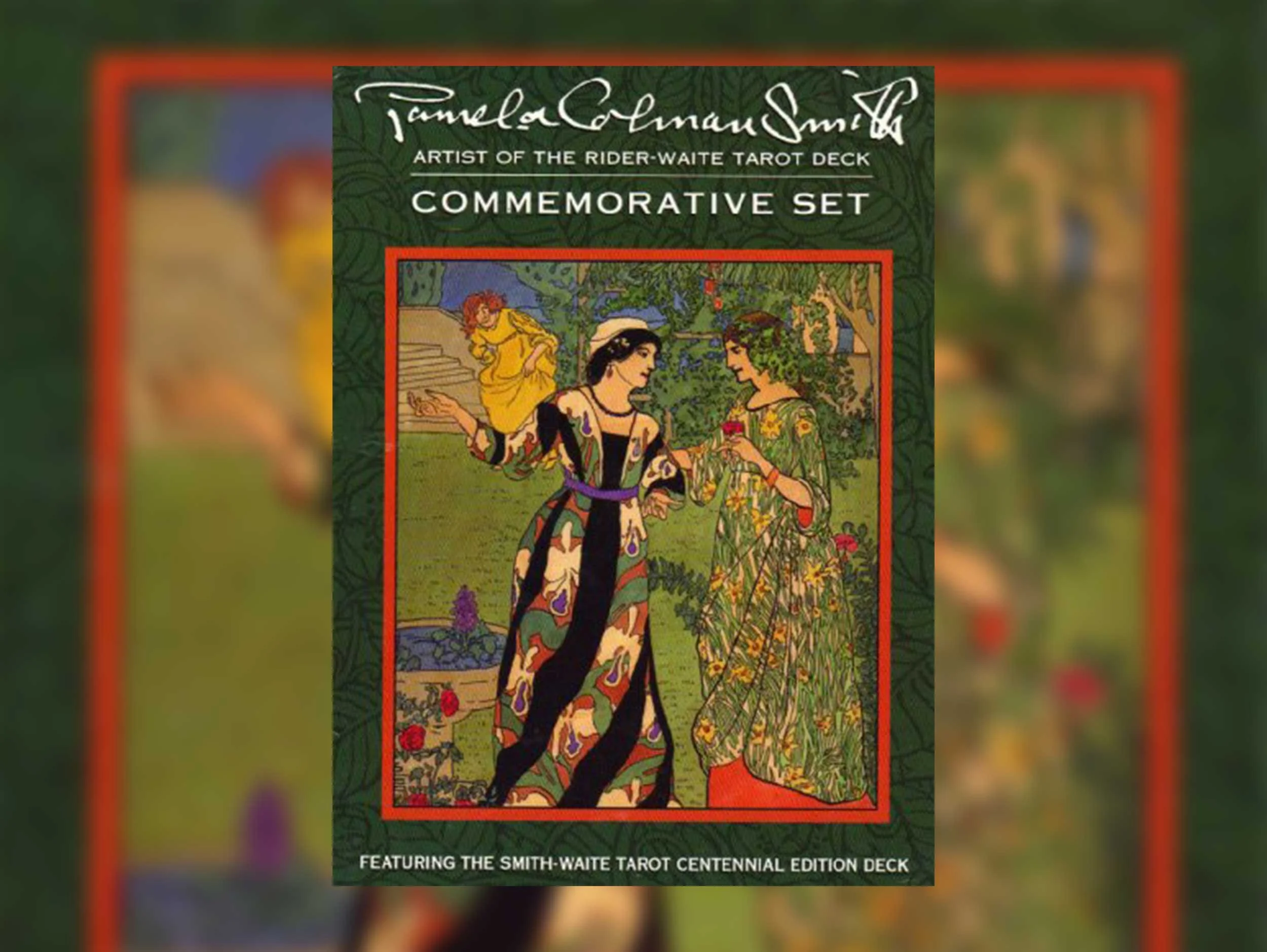
    Featuring the Smith Waite Tarot Centennial Edition Deck
    Published by US Games
    ISBN 978-1-57281-639-8

    There are more tarot decks based on A.E. Waite’s designs (and Pamela Colman Smith’s artwork) than any other tarot model.

    There is the Rider Waite, the Golden Rider, the Universal Waite, the Albano Waite, The Original Rider Waite, The Radiant Rider Waite, and so on.

    When we look at the Smith Waite Tarot Centennial Edition Deck, the first question we need to ask is this. Did the world really need yet another version of this deck?
    To me, the answer is clear. The world desperately needs this deck, and any reader who values Pixie’s humongous contribution needs it too.

    US Games released this set to celebrate the one hundred year anniversary of the publication of the Waite designed images. That they took this as an opportunity to honor Pamela “Pixie” Colman Smith is brilliant, and long overdue.

    Whether you are a new tarot student or an experienced reader, you may wonder why you should pay $35 for yet another Waite deck.

    First, the deck is only a small part of what is included in this special set. The set comes in an attractive box that opens up to reveal compartments on each side. One compartment holds the tarot deck. The other holds a wealth of amazing stuff, included a new edition of the Pictorial Key to the Tarot, and a wonderful book by Stuart R. Kaplan.

    Kaplan’s book is “The Artwork and Times of Pamela Colman Smith.” It is one hundred pages of color illustrations and stories about Pixie. We can see her handwriting, read her poetry, and learn more about the woman who influenced tarot so greatly. Pixie finally becomes a real person, rather than simply the talented puppet who rendered drawings for Waite. The book includes primary source material. It is graphically beautiful, and a pleasure to read.

    That same compartment holds other treats, including postcards of Pixie’s non-tarot artwork, and a tarot spreadsheet. This truly is an epic collector’s edition.

    The tarot deck itself is a masterpiece. Of course, we are familiar with the images, and with the structure of the tarot itself. A few things make this edition special, and make it my very favorite edition of this deck for professional readings.

    The cards are printed on very heavy stock. It is noticeably heavier than an average deck. It’s perfect for a collector’s edition! The deck stands taller than average decks when side-by-side. The weight of the stock does make the deck harder to shuffle. In all my years of professional reading, I have rarely developed calluses on my hands from sweating over the hot tarot cards. After using this deck as my primary reading deck for only a month, my hands had developed definite ridges. For me, this was kind of a cool badge of honor, although I understand that not every reader might appreciate it that way.

    The card backs are a light antique-looking blue with a white border. The white flower from Death’s flag is in the center. Pixie’s familiar initial logo is large and black in alternate corners. The logo does cause clients to ask, “What does that symbol mean?” A quick opportunity to educate an interested client about tarot is never a bad thing.

    The card images are re-colored in muted tones. There is a subtle texture, as well. Together, the tones and texture make the cards look antique, as if they had actually been made during Pixie’s time.

    In a way, I regret reading with my deck at all, since keeping this collector’s set in mint condition might have been wise. But these cards are just too tempting to keep on the shelf.

    My solution is to buy two sets. That way, you can send the postcards to your friends, or incorporate them in art or décor projects. You can read with the deck, use the books as reference, and still have a perfect set in your collection.

    That’s right, I am recommending this tarot set so highly, I think some folks will need not only one but two!

  • Introducing the Lover’s Path Tarot

    Introducing the Lover’s Path Tarot

    “Tell me about my love life!” I think most tarot readers hear this request more often than any other question. Perhaps this is because love, romance and procreation are emotional and biological prime directives for us all. Perhaps it is because love between humans is one of the ways that divine power shows itself on earth. Perhaps it is because love and passion are the causes of great human suffering throughout history and all over the world.

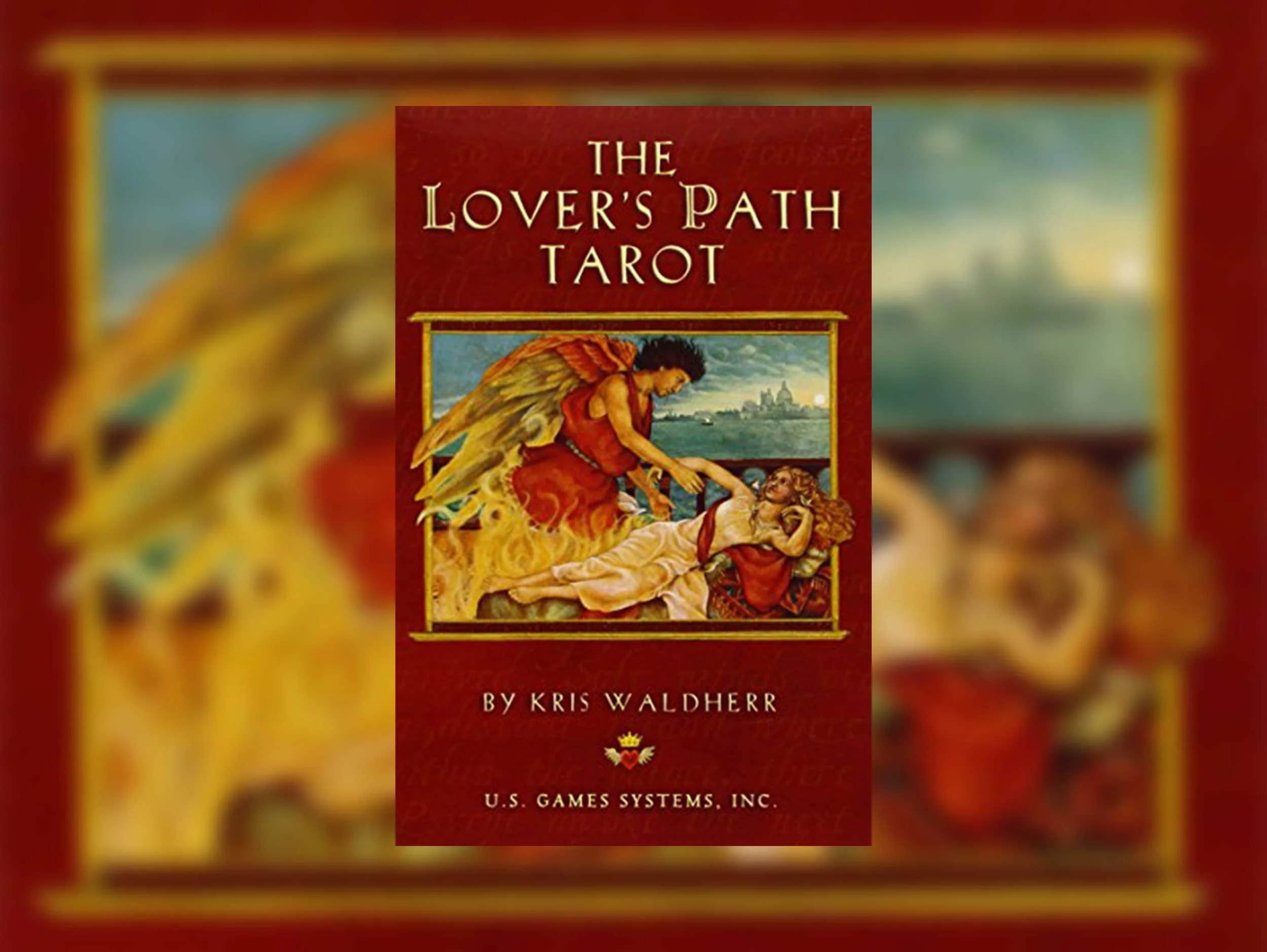
    From Kris Waldherr, author and artist of the Goddess Tarot, comes the Lover’s Path Tarot. This tarot set is specifically designed to address the question of love in our lives.

    Its packaging is luxurious and romantic; reminding us that romance is an energy we create around ourselves. Its stories remind us of the eternal joys and struggles of love. As it tells stories of lovers through time and mythology, it tells our own stories as well.

    A Storytelling Tarot

    All tarot decks tell a story. Typically, it is the story of the Fool, an Everyman sort of character, who experiences each tarot card as a lesson along the path of life. Recently man tarot artists and authors have used the storytelling nature of the tarot to depict stories from many cultures and times.

    The Ancestral Path Tarot uses each Minor Arcana suit to tell a story from a specific race of the human family. The Whimsical Tarot uses each card to depict a fairy tale or nursery rhyme. The Goddess Tarot assigns a particular Goddess and her mythology to each Major Arcana card, and to each suit of the Minor Arcana. The Lover’s Path Tarot is an ambitious story telling project. Each Major Arcana card is represented by a love story, as is each suit of the Minor Arcana.

    As tarot readers, we must all be storytellers. We must look at the cards as they are laid out and put the images together to tell the story of the querent’s life, or situation.

    A Teaching Tarot

    The point that Kris Waldherr stresses is that all our relationships mirror our relationship with ourselves. If we are out of balance, our relationships will be out of balance. If we treat ourselves badly, we will be in relationships with those who treat us badly, or with those we treat badly.

    In studying the Lover’s Path Tarot we have the opportunity to learn about the tarot, to learn about love stories throughout the ages, to learn about the nature of love, and, maybe most importantly, to learn about ourselves.

    The best way to use the Lover’s Path Tarot to help improve our relationship with self is to dialogue with the cards. Use the cards as a method of communicating with your higher consciousness, and let one answer lead to the next question. These methods are described in detail starting on page 124 of the Lover’s Path Tarot Book.

    The Lover’s Path Tarot Book

    The Lover’s Path Tarot Book is a wonderful resource. It contains details stories of the featured lovers, upright and reversed meanings for each card, techniques for reading, spreads and quick reference charts. It is a wonderful springboard as you begin a new relationship-your relationship with the Lover’s Path Tarot!

  • Paulina Tarot Sneak Peek Preview of a Deck Now Published

    Paulina Tarot Sneak Peek Preview of a Deck Now Published

    Tarot World Magazine
    Sneak Peek
    Paulina Tarot
    U. S. Games System Inc.
    Christiana Gaudet

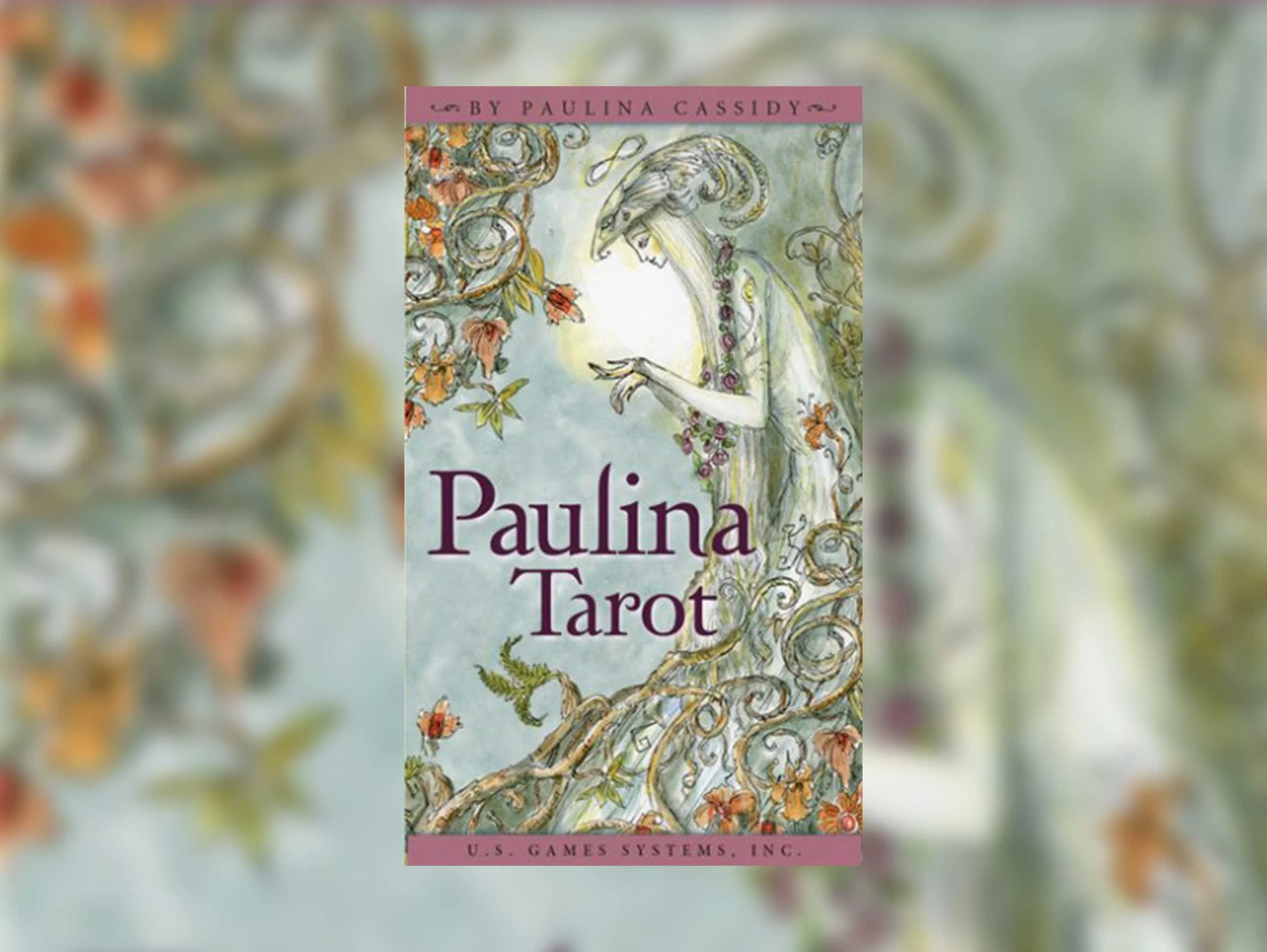
    Artist Paulina Cassidy has made it easy for us to get a sneak peak at her forthcoming Tarot Deck, Paulina Tarot. Her website, Restless Moon Gallery, has digital images of all 78 cards. Her darkly whimsical drawings made me curious about this soon-to-be-published Tarot, and so I had a conversation with Paulina Cassidy on the phone from her home in Chattanooga, Tennessee. We talked about Tarot, art, and this exciting new deck.

    Paulina Cassidy can’t remember a time when she wasn’t an artist. From the time she was a toddler, she had only one choice for a profession. As a young adult working under her maiden name, Paulina Stuckey, she began writing, illustrating and self-publishing storybooks and creating art prints that feature fanciful characters. With the launch of her website in 1999, she developed a world wide clientele.

    When Cassidy speaks of the creation of Paulina Tarot, it feels like a truly magickal experience. Cassidy says that she had no real theme in mind when she began designing the deck. In fact, the deck began as a study tool. While she had been interested in the Tarot for many years, she began the fifteen-month project with only a rudimentary knowledge of the cards. “The process of me learning the Tarot was for me to actually create each card.” She told me. “I’d focus on one card at a time, and interestingly enough, when I’d choose a card (I didn’t actually do them in sequence) it felt like it corresponded with an important event or turning point in my life, and then that card became a guiding point.”

    Cassidy told me that as she let her subconscious mind guide the design of the cards, the images that resulted were closer to the traditional images and meanings than she had realized or planned. One of the cards Cassidy struggled with was the Five of Wands. “I think I created four or five different images for that one.” It’s no surprise that a card that speaks of conflict might create conflict in its creation!

    Cassidy’s primary medium is watercolor and ink. Her work is reminiscent of Tim Burton, Dr. Seuss, and Edward Gorey, three artists that she counts amongst her influences. “But it’s not just art that influences me,” she says. “It’s music, it’s places, it’s a combination of so many elements that affect us and create the style that we have.”

    One of the places that clearly shows its influence in Paulina Tarot is New Orleans. Paulina and her husband lived there until 2007, and it was there that work on Paulina Tarot was begun. Many of the characters in the deck are dressed for masquerade, and there is a “Mardi Gras feel” to some of the cards. Harlequins and ballerinas dance their way through the deck. Sweet-faced girls wear magnificent ball gowns with intricate patterns. There are people with wings, and people riding on large birds. There are mythical creatures such as unicorns and mermaids. There are animals such as the world has never seen, like a flying lion, and a cat with the tongue of a snake. When I asked Cassidy who these creatures were and what they meant, she said, “I really don’t know- I wish they’d introduce themselves to me.” Cassidy says that her creatures do talk, “according to people who can hear them.” She says that she can only sense them. “I’ll be sitting there and suddenly something’s hilarious, and I don’t know what it is but I have to run to the drawing board and draw it.” Cassidy says her Tarot is peopled with creatures from her own subconscious, who “found out I was working on this Tarot deck and said ‘Hey, I want to be a part of this!’”

    But lest you decide that this deck lacks true symbolism, or is simply an “Art Tarot,” take a deeper look at the cards. You’ll see the Devil, who has enslaved himself. Look at the Queen of Cups, whose gown is the ocean. While each element of each image does not always have a symbolic meaning, each card as a whole does speak its traditional meaning quite clearly.

    Many of the characters are in poses similar to their Rider Waite Smith counterparts. Like many of us, the trusty deck in the yellow box was Cassidy’s first. As visually different as Paulina Tarot is, it still sticks to the basic RWS conventions. There are some obvious breaks from the familiar, but none that are out of the ordinary for a modern deck. The Magician and the Hermit are both female, for instance, but their poses and interpretations remain traditional.

    As we closed our conversation, I asked Paulina Cassidy to speak directly to the many Tarot readers who will be purchasing her deck. “Just have fun with it,” she said. “Let yourself be amused and entertained and moved by what you see. That means the world to me.”

    Paulina Tarot will be released by U.S. Games sometime this year. It will be a standard size, and packaged with an LWB written by Paulina Cassidy. Until the deck is available, we can admire it at Restless Moon Gallery, http://www.paulina.ws.

    Please visit Paulina Fae’s website for more information!

    (Note 9/7/24: The link to Restless Moon Gallery wasn’t working. The link to Paulina Fae website was added.)